
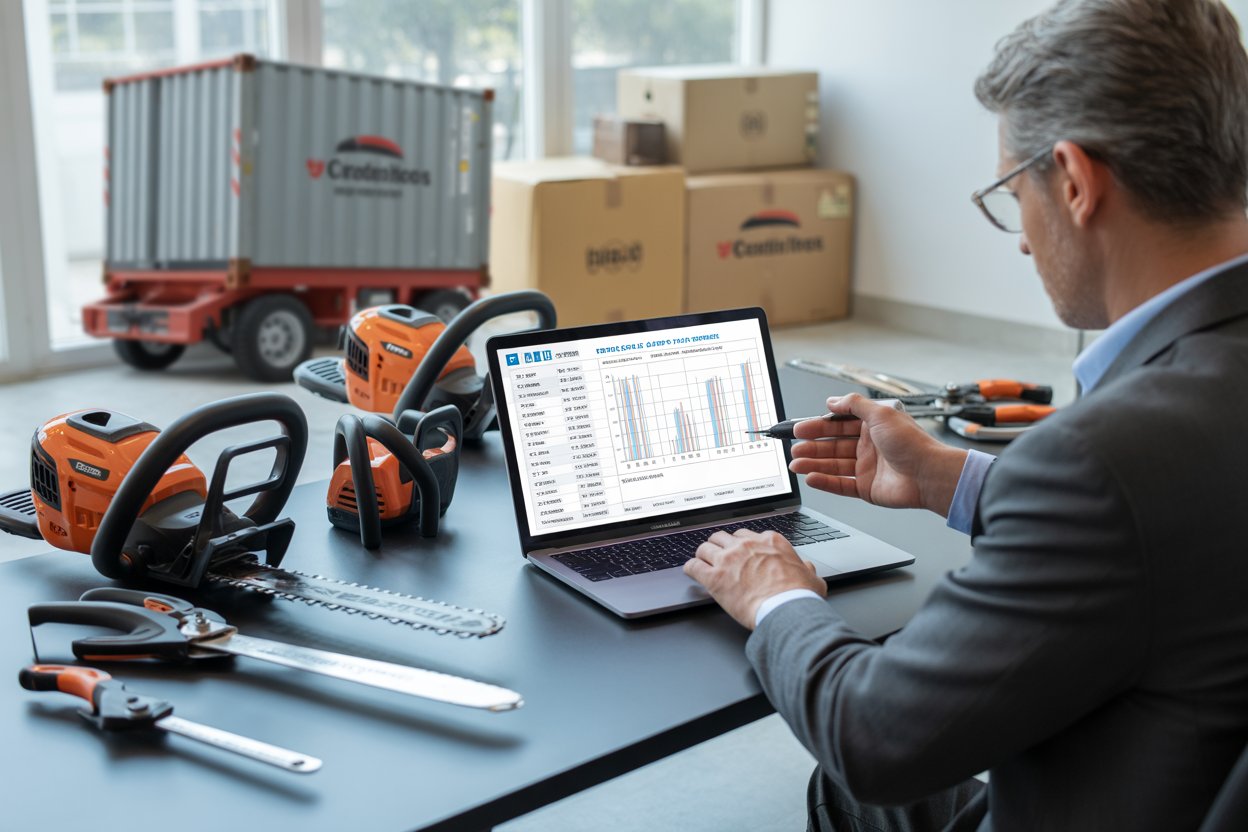
Importing cordless garden tools from China has become one of the most efficient ways for global distributors to expand their product lines while keeping costs competitive.
But the process involves more than just finding a supplier — it requires strategy, due diligence, and understanding evolving market regulations1.
This 2025 buyer’s guide explains how to import cordless garden tools from China safely and profitably — from supplier selection to logistics, compliance, and quality control.
Whether you’re a European distributor or a Latin American wholesaler, this guide gives you the roadmap to minimize risk and maximize your ROI.
Why Source Cordless Garden Tools from China in 2025?
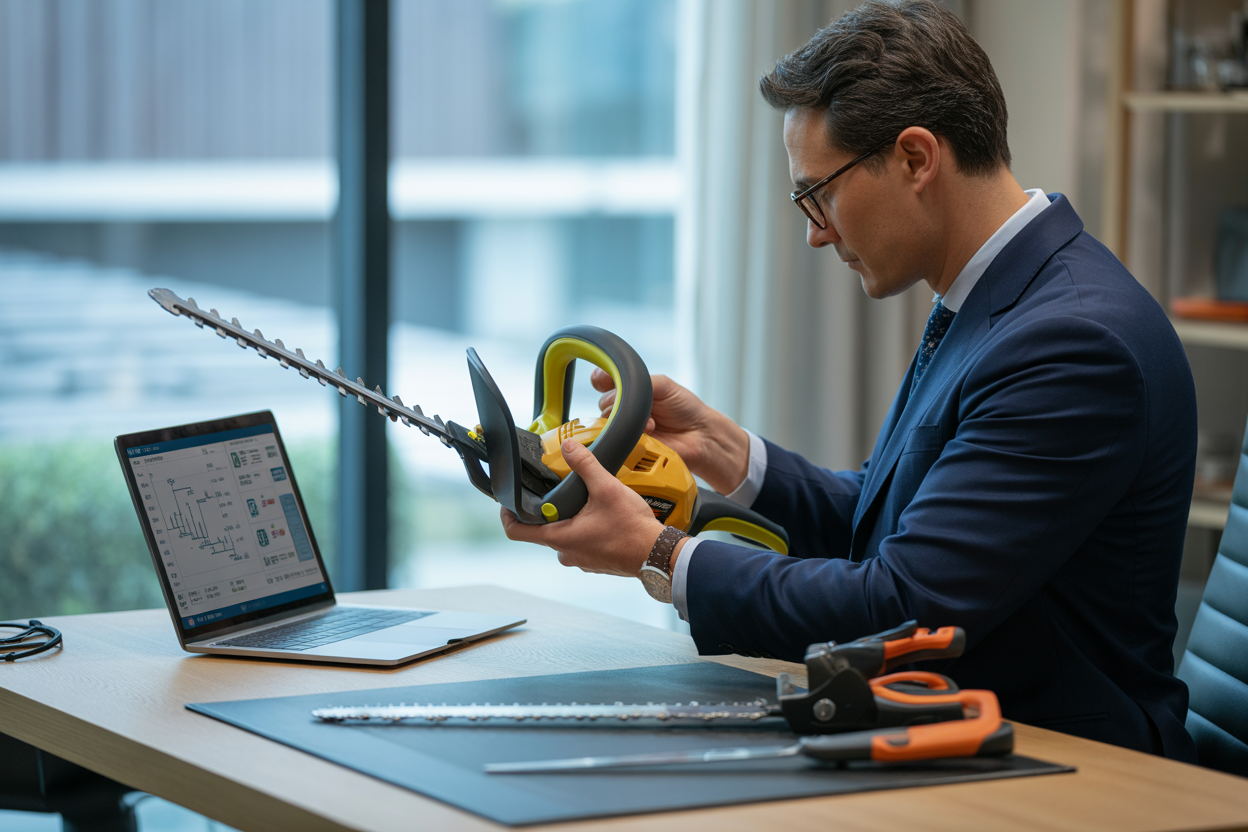
China remains the world’s powerhouse for cordless garden tool manufacturing — and for good reason.
In 2025, Chinese manufacturers lead the industry with advanced battery systems, integrated brushless motors, and flexible OEM/ODM services that meet European standards.
Here’s why importers continue to choose China:
- Comprehensive supply chain: From battery cells to brushless motors, every component is made domestically.
- Competitive pricing: Economies of scale and automation keep unit costs low.
- OEM/ODM flexibility: You can customize design, color, logo, and packaging.
- Fast innovation cycle: New cordless platforms (12V–54V) are developed yearly.
- Certified compliance: CE, GS, RoHS, and EMC certificates available for EU import.
In short, China offers end-to-end production capability that allows importers to build private labels with minimal setup cost.
What Are the Main Types of Cordless Garden Tools for Import?
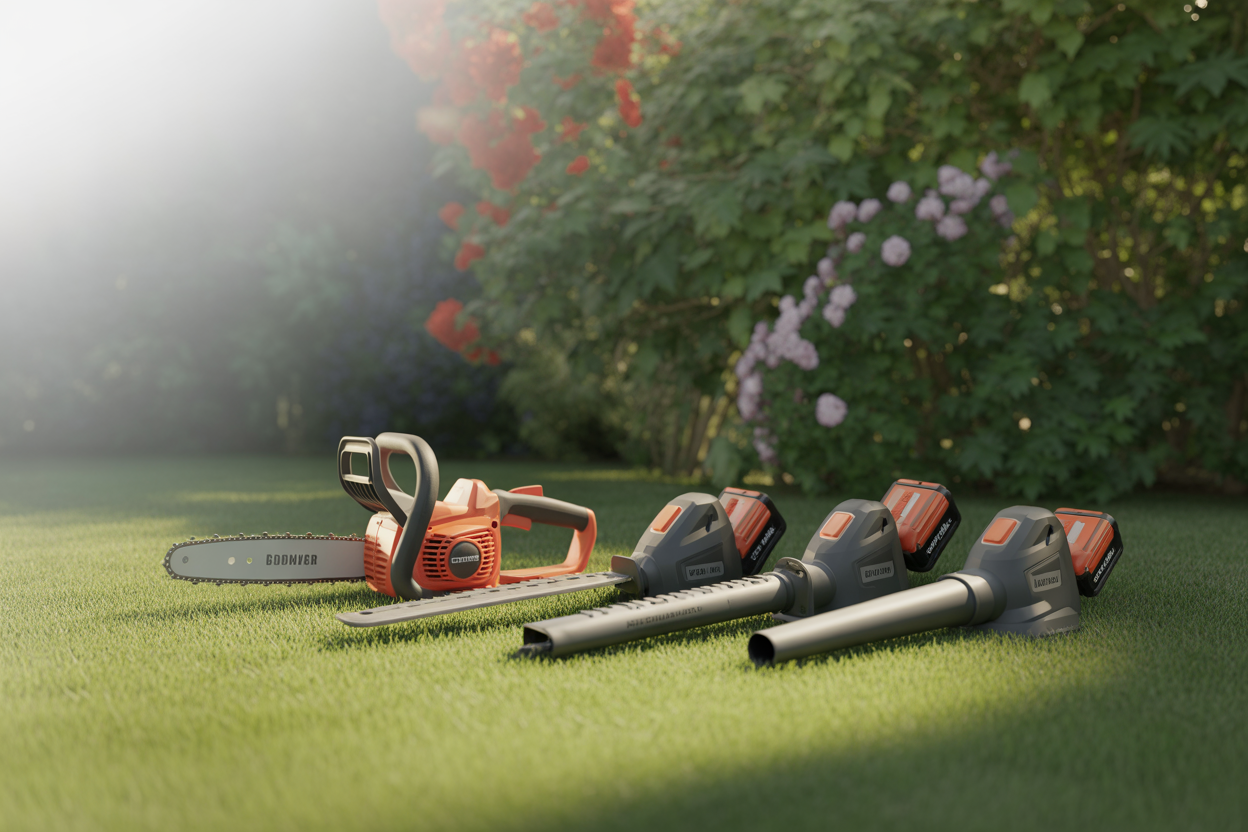
Before launching your import plan, it’s critical to understand which cordless garden tools2 are in high demand — and how to select models that match your buyers’ target market.
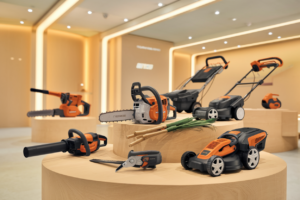
The main categories of cordless garden tools for import in 2025 include chainsaws, pruning shears, hedge trimmers, grass trimmers, blowers, and pressure washers — each serving a distinct professional use case.
1. Cordless Chainsaws – Compact Power for Heavy Tasks
Cordless chainsaws are no longer limited to light trimming. Modern brushless 21V–40V chainsaws can cut branches up to 25cm in diameter while remaining portable and emission-free.
- Best for: Landscaping, agriculture, municipal work
- Popular sizes: 4", 6", 8", 10", 12"
- Features to prioritize: Auto chain lubrication, quick-tensioning system, high torque brushless motor
Chainsaws often represent the highest margin category for importers, as buyers increasingly switch from gas-powered models to lithium versions to meet eco-regulation standards.
2. Cordless Pruning Shears – The Precision Tool for Professionals
Used by vineyard owners, fruit growers, and landscape professionals, cordless pruning shears are a high-demand niche tool.
- Voltage: 16.8V–25V
- Cutting capacity: 25mm–50mm
- Preferred features: Brushless motor, SK5 steel blades, digital battery display
Importers can easily differentiate their catalog by offering OEM color and branding options, since pruning shears are often bundled with other garden tools in one retail set.
3. Cordless Hedge Trimmers – For Perfect Finishing Lines
A cordless hedge trimmer defines the “look” of any professional garden.
- Voltage: 21V–40V
- Blade length: 450mm–650mm
- Key features: Dual-action blades, low vibration, 180° rotating handle
The growing trend is toward interchangeable battery platforms, enabling users to use the same battery for trimmers, blowers, and chainsaws — reducing costs and increasing loyalty.
4. Cordless Grass Trimmers and Brush Cutters
These are the most versatile and widely used tools in every landscaping fleet.
- Voltage: 21V–40V
- Cutting options: Nylon line or metal blade
- Design focus: Telescopic shaft, lightweight structure, foldable handle
OEM buyers often request telescopic designs for compact shipping and better retail presentation.
5. Cordless Leaf Blowers – Clean Finish, Professional Impression
Blowers are a “silent revenue driver” — simple design, low defect rate, and strong market acceptance.
- Voltage: 21V–54V
- Air volume: 3.5–5.0 m³/min
- Key features: Variable speed trigger, detachable tube, brushless motor
Blowers are often imported as add-on products for tool sets or seasonal promotion bundles.
6. Cordless Pressure Washers – Emerging Growth Segment
Portable pressure washers (12V–21V) are becoming increasingly popular among car-care and outdoor cleaning users.
- Key features: Self-priming system, adjustable nozzle, lithium battery operation
- Market trend: Fastest-growing cordless category in 2025
Tip: Focus on cordless tools that share a unified battery system (21V or 40V platform). This compatibility reduces inventory complexity and helps build your brand ecosystem.
How to Find Reliable Cordless Garden Tool Suppliers in China?
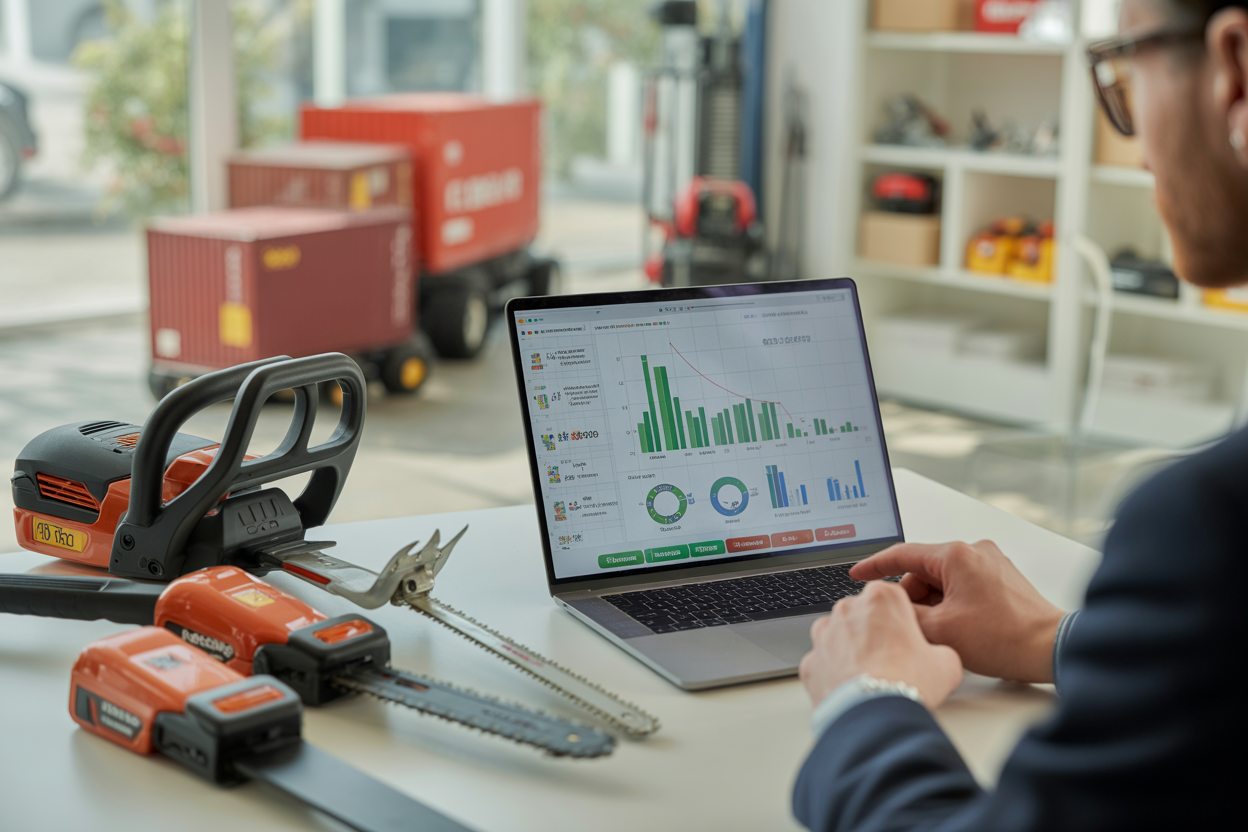
Sourcing in China can be profitable — but only if you work with the right partner. With thousands of factories listed online, identifying genuine manufacturers versus trading intermediaries is the first step toward risk control.
To find reliable cordless garden tool suppliers in China, focus on factories with integrated R&D, in-house battery assembly, and proven export experience.
Here’s how professional importers filter suppliers:
1. Research and Verification
- Check registration data: Use qcc.com or 1688.com to verify business licenses.
- Confirm factory location: Real manufacturers are typically based in Zhejiang (Jinhua, Yongkang), Jiangsu, or Guangdong.
- Request a live video call or factory tour: Serious suppliers are transparent.
2. Evaluate Manufacturing Capabilities
A reliable supplier should have:
- Dedicated assembly lines: 3+ production lines (battery, assembly, testing).
- R&D team: Engineers capable of developing brushless systems and voltage variants.
- Testing equipment: Battery aging cabinets, torque testers, noise measurement systems.
- Certifications: CE, GS, RoHS, ISO9001, and IEC 60335-2-29 for chargers.
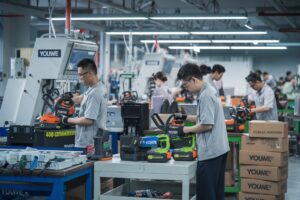
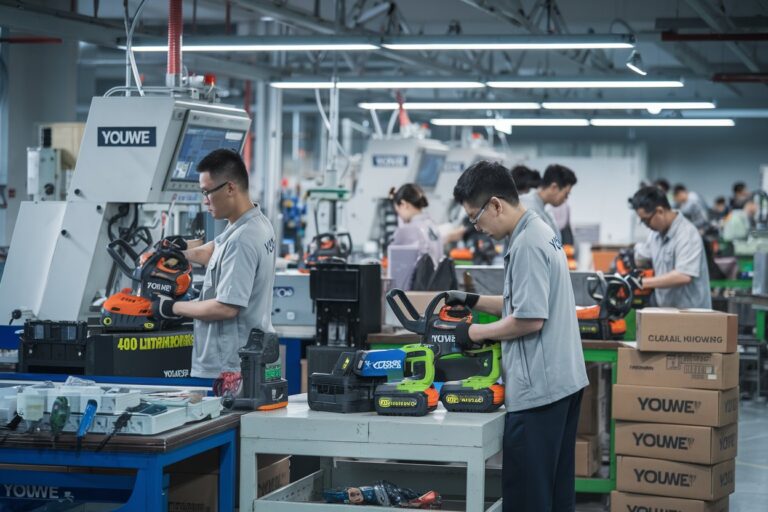
Factories like YOUWE Power Tools have independent battery assembly and motor R&D — reducing reliance on third-party parts, which ensures consistency.
3. Compare OEM/ODM Flexibility
Good suppliers allow:
- Custom color & logo (silk print or injection mold).
- Packaging design service (color box, label, instruction manual).
- Private-label exclusivity in your region if volume is stable.
This flexibility helps you position your brand competitively in your domestic market.
4. Communication & Response Time
Prompt and clear communication reflects professionalism.
During early contact, observe:
- How fast do they reply to technical questions?
- Do they understand EU standards and export documents?
- Can they share shipment records or references from other buyers?
5. Pricing vs. Value
Low price doesn’t always mean cost advantage — hidden issues (poor battery quality, inconsistent assembly) can destroy your brand’s reputation.
Instead, focus on stable performance and long-term value, not just FOB pricing.
Pro Tip: Ask for the supplier’s voltage range & motor compatibility chart — it instantly reveals their technical depth.
6. Check Export Background and Customer Base
Reliable factories often have long-term clients in Europe, Japan, or Latin America.
They can provide:
- Previous shipment references
- Export percentage by region
- Trade show participation (e.g., EIMA, Canton Fair, Tokyo DIY Show)
Such transparency proves they are stable and compliant manufacturers.
In short:
The best Chinese suppliers don’t just sell you products — they help you build your brand.
Prioritize factories with real production capacity, transparent processes, and professional after-sales systems.
For example, YOUWE Power Tools integrates battery production, brushless R&D, and OEM customization, enabling importers to receive consistent quality across the full cordless range — from chainsaws to pruning shears.
How to Handle Quality Control Before Shipment?
Even with a good supplier, quality assurance must never be skipped.
Before mass shipment, conduct sample testing, third-party inspections, and battery performance checks to ensure consistent quality.
Here’s a practical quality control workflow:
- Step 1: Request pre-production samples (verify appearance, torque, and runtime).
- Step 2: Approve color, label, and logo print (avoid misbranding).
- Step 3: Arrange third-party inspection (SGS, TÜV, or Intertek).
- Step 4: Test random units for battery cycle and motor temperature.
- Step 5: Require detailed inspection report with photos and pass/fail list.
Tip: Always clarify “defect ratio tolerance” (e.g., ≤1%) and replacement policy before signing the PI.
Consistent QC builds your reputation as a trusted importer.
What Regulations and Certificates Are Required in 2025?
Regulatory compliance has tightened across Europe since the EU Battery Regulation (2023/1542) came into force.
To import cordless garden tools in 2025, ensure compliance with CE, RoHS, and EU Battery Regulation 2023/1542 standards.
Key documents required:
- CE Declaration of Conformity (DoC)
- RoHS and EMC test reports
- Battery labeling compliance (recycling symbol, producer responsibility ID)
- Packaging and WEEE labeling
Failure to meet these standards may result in customs detention or fines.
For the UK market, confirm UKCA marking, and for Latin America, check local voltage compatibility (110V/220V chargers).
What Are the Shipping and Payment Terms for Garden Tools?
Understanding logistics is crucial to cost control.
Most Chinese suppliers ship cordless garden tools under FOB Ningbo or Shanghai terms, with lead times of 30–45 days for bulk orders.
Common terms:
- MOQ: 200–500 units per model
- Payment: 30% deposit, 70% balance before shipment
- Packing: Color box + master carton
- Lead time: 35 days after sample approval
- Shipping options: LCL/FCL sea freight, or air for urgent samples
For European importers, consolidating multiple SKUs in one container significantly reduces logistics cost per unit.
How to Build a Long-Term Partnership with Chinese Manufacturers?
Import success depends on partnership, not one-time purchase.
The best importers work closely with their Chinese manufacturers on R&D feedback, market insights, and branding improvements.
Practical tips:
- Communicate regularly: Monthly update on sales and feedback.
- Share market trends: Helps factory align product roadmap.
- Visit factories annually: Builds mutual trust and understanding.
- Negotiate annual volume targets: For better pricing and priority in production.
Factories like YOUWE value long-term buyers who treat cooperation as a partnership, not a transaction.
Conclusion
The global shift to cordless garden tools is accelerating — and China remains the best sourcing destination for high-quality, affordable, and customizable solutions.
By understanding regulations, verifying suppliers, and applying strict quality control3, importers can build a reliable and profitable product line for 2025 and beyond.
Start small, choose reliable partners, and grow your brand step by step — efficiency in every cut, trust in every deal.