
I meet many buyers who feel confused when they compare CE and GS. I see this in Italy, Spain, and Germany. They want to import cordless garden tools1 or power tools, but they are not sure which certificate they need. This slows down their project and creates extra risk.
CE is a mandatory EU requirement based on self-declaration, while GS is a voluntary German safety mark based on strict third-party testing. Both impact importers differently in cost, time, and market acceptance.
I learned this difference early in my work. Many European buyers worry about GS because they think it is slow and expensive. Some only want CE. Some need both. This is why I always explain the rule, the risk, and the real testing process before they launch a new tool. It helps them make a safe and clear decision.
What Is CE Certification and What Does It Mean for Importers?
Many importers ask me what CE really means. Some think it is a certificate from a lab. Some think it is the same as GS. I always tell them CE is the basic entry rule for Europe, and every cordless tool must meet this standard.
CE is a legal requirement for tools sold in the EU. It confirms that the product meets the essential safety rules through documentation, technical files, and correct labeling.
Core meaning of CE for importers
CE is not a quality mark. CE is a legal declaration. When I place the CE mark on a tool, I confirm that the motor, battery, charger, structure, and documentation meet EU directives. This includes EMC, LVD, noise, RoHS, and the new battery rules. Importers must keep a technical file and a DoC. Many buyers do not know this. They think the factory or the lab keeps the file. In fact, the importer must also keep it.
Why CE matters for customs
When customs check goods in Italy or Spain, they often ask for the DoC, test reports, and correct labeling. If the CE mark is wrong, or if the documentation is missing, the shipment may be delayed or stopped. I saw this happen to several new Amazon sellers. They used a fake CE document. Customs scanned the QR code. The report did not exist. Their cargo was held for months.
What CE covers for cordless tools
CE for a cordless tool is not only for the tool body. The battery also needs a test. Many buyers forget this. The battery and charger have their own directives. This is why YOUWE built a full battery testing system. I want the battery platform to meet EU rules before I release any new model.
| CE Requirement | What Importers Must Know | Common Risk |
|---|---|---|
| DoC (Declaration of Conformity) | Importer must keep it | Many suppliers fail to prepare correct DoC |
| Technical File | Must be stored for 10 years | Missing drawings or PCB data causes issues |
| CE Marking | Must follow official proportion | Wrong label can cause customs hold |
| Battery Wh Label | Required for lithium batteries | Many factories forget to print it |
| EMC / LVD Test | Required for electronics | Some suppliers use fake reports |
CE vs GS Certification: What’s the Difference? (Side-by-side Comparison)
I often hear this question from German distributors. They want to know if GS is real value. They also want to know why GS takes longer and costs more. I tell them GS is about safety, not only about legal entry.
CE is mandatory for EU entry with self-declaration. GS is voluntary but more strict, with third-party testing and strong value in Germany.
How CE and GS differ in purpose
CE is about compliance. GS is about proven safety. GS testing looks into internal structures, blade protection, motor heating, battery stability, and long-term use. CE does not go this deep. This is why German buyers trust GS more. When a tool has GS, they feel safe to sell it in retail stores.
Why GS costs more and takes longer
GS requires a full audit. The lab checks every part of the tool. They run drop tests, overload tests, temperature tests, insulation tests, and plastic material tests. They also inspect the factory. This takes weeks or months. CE can be much faster. Some suppliers try to avoid GS because they cannot meet the internal safety rules. This is why many German buyers want to work with a GS-ready tool supplier.
Side-by-side comparison
| Item | CE | GS |
|---|---|---|
| Legal Status | Mandatory | Voluntary |
| Testing Depth | Basic compliance | Strong structural safety |
| Issued By | Factory self-declaration | Third-party lab (BV, TÜV) |
| Factory Audit | Not required | Required |
| Market Value | EU-level | Especially strong in Germany |
| Cost | Lower | Higher |
| Time | Short | Longer |
How to Get CE and GS for Your Products (Step-by-Step Guide)
Many importers2 want to know the real testing steps. They want clear cost, timeline, and documents. They ask me this when they plan a new product line. I use a simple path to guide them through the process.
CE requires documentation, technical files, and compliance testing. GS requires full structural testing and a factory audit by a notified lab.
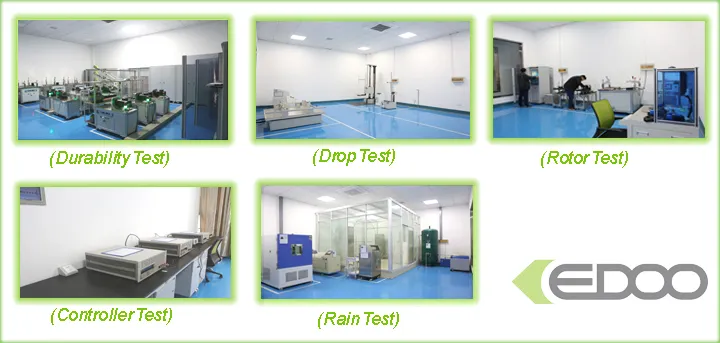
Step-by-step for CE
- Select the correct EU directives
- Run EMC / LVD / Battery tests
- Prepare technical file
- Prepare DoC (importer signature)
- Apply correct CE label
This process is simple but must be correct. Many suppliers use old reports or fake documents. I warn importers to check every report and make sure the model and photo match the product they buy.
Step-by-step for GS
- Submit sample to GS lab
- Lab conducts full risk check
- Structural and safety test
- Battery and charger test
- Factory audit
- GS certificate issued
- Annual follow-up inspection
GS is a strong safety system. If the supplier cannot handle it, the process will fail. YOUWE works with BV (Bureau Veritas), a trusted lab in Europe. Our cordless tools have passed GS for several years. This gives our clients more confidence when they enter Germany.
Common mistakes importers should avoid
| Mistake | Why It Causes Problems |
|---|---|
| Using fake CE reports | Customs can verify report authenticity |
| Wrong CE label ratio | Seen as non-compliant |
| Missing battery test | Shipment may be blocked |
| Supplier cannot pass GS audit | GS project fails |
| No technical file | Importer takes legal risk |
CE/GS Certification for Cordless Garden Tools & Power Tools (Industry-Specific Guidance)
Cordless tools have more risk points than simple electric appliances. This is because they include motors, high current, and lithium batteries. Many European buyers do not know this. They think the rule is the same as plug-in devices. I explain the real risk each time I start a new project.
Cordless tools require deeper safety checks for batteries, motors, and protection systems. GS testing is especially strict for moving parts and heating.
Why cordless tools need more testing
A cordless chainsaw has blade movement, motor speed, and torque. A pruning shear has a blade close to the user’s hand. A blower moves high air volume. These functions need strong safety control. GS labs test overload, stall protection, blade strength, battery heat rise, and PCB stability.
Key CE/GS focus areas for lithium tools
| Component | What Labs Check | Reason |
|---|---|---|
| Battery Pack | Heat, short circuit, vibration | Prevent fire and swelling |
| Motor | Temperature, overload | Prevent burn or smoke |
| PCB | Stability under load | Avoid failure during use |
| Blade / Chain | Strength test | Prevent fracture |
| Housing | Drop test | Ensure impact resistance |
How YOUWE handles battery safety
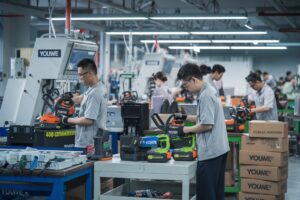
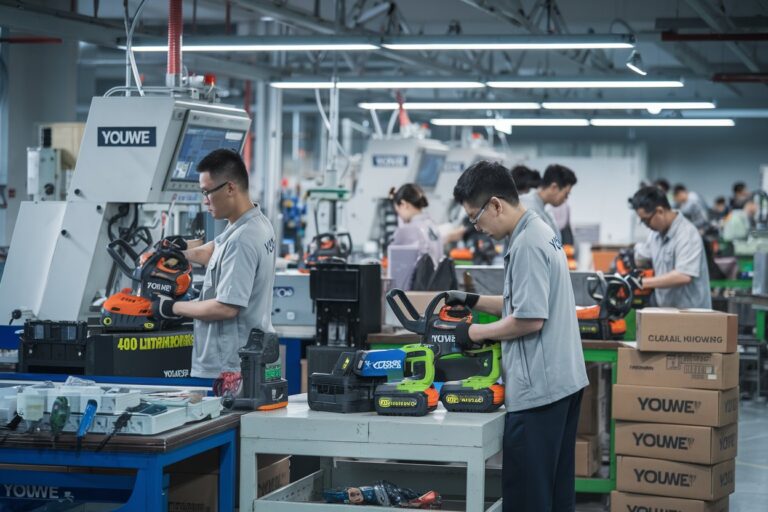
I built a full battery testing3 system in the factory. We run charge cycles, load tests, and heat tests. This helps us meet CE battery rules. It also helps us prepare for GS projects. When the lab checks our battery pack, they can see the system is stable.
Why Working With a CE/GS-Ready Supplier Saves You Time and Cost (YOUWE Case Insight)
Many buyers ask why they cannot ask any supplier to do CE or GS. I always tell them the certification depends on the internal structure, not the outside design. If the structure is weak, the tool cannot pass GS. If the documentation is missing, CE is not valid.
A CE/GS-ready supplier reduces testing failures, shortens the project timeline, and provides full documentation for customs and market audits.
How YOUWE prepares products for CE/GS
YOUWE builds each tool with CE and GS requirements in mind. We work with BV for tests. We prepare full technical files, DoC drafts, drawings, PCBA layouts, and battery data. This reduces delay for buyers in Italy, Spain, Germany, and other EU markets.
Why this reduces importer cost
If a tool fails a GS test, the importer pays again for retest. If a CE document is wrong, customs may stop the shipment. YOUWE prevents these issues by preparing the tool and the documentation from the start. This saves cost and time.
YOUWE’s compliance support
| YOUWE Capability | Value for Importers |
|---|---|
| Full CE/GS file package | Easy customs release |
| Battery system testing | Higher safety and stability |
| BV-certified testing | Strong credibility in Europe |
| Experience with many tool models | Lower project risk |
| Support for OEM/ODM | Faster product launch |
–
Conclusion
CE and GS guide the safety path for cordless tools. Both impact cost, timeline, and market access. Importers who understand these rules make better choices. A CE/GS-ready supplier reduces risk and supports long-term growth in Europe.
-
Knowing the regulations helps importers navigate compliance and avoid costly delays. ↩
-
Identifying challenges helps importers prepare better and avoid common pitfalls in the certification process. ↩
-
Battery testing is crucial for safety; knowing the requirements helps ensure compliance and market readiness. ↩