
European importers often face five major problems when buying pruning tools from China — inconsistent quality, certification issues, shipping delays, unclear communication, and poor after-sales support1. To avoid these, importers should work with verified OEM/ODM manufacturers2, request CE-certified samples, clarify packaging and lead times before payment, and maintain transparent after-sales agreements. Partnering with a reliable supplier like YOUWE Garden Tools ensures professional manufacturing, stable quality, and full compliance with EU standards.
🌍 The Hidden Pain Behind Sourcing Pruning Tools from China
European importers often struggle with unstable product quality, delayed shipments, and certification issues when sourcing pruning tools. Identifying these challenges early helps avoid financial loss and brand damage.
If you’re a European importer, you already know how tricky it can be to source pruning tools that truly meet your expectations.
You might have faced this before:
- The sample looked perfect, but the mass order was disappointing.
- Customs held your shipment due to missing CE certification3.
- Or worse — your brand’s reputation suffered from battery or blade failures in the market.
These are not isolated incidents — they are systemic problems in the garden tool supply chain.
After over 20 years of exporting cordless tools to Europe, YOUWE Power Tools has seen importers make the same costly mistakes again and again.
Let’s uncover the 5 most common problems importers face — and how you can avoid them entirely.
🪚 1. Quality Inconsistency Between Samples and Bulk Orders
Samples may look perfect, but bulk orders often differ in motor torque, cutting performance, or battery quality. Consistent production control ensures identical quality across all batches.
Why It Happens?
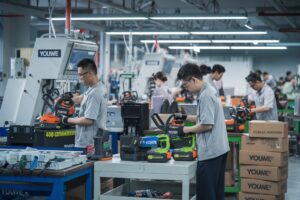
Factories often present high-quality samples made in small batches, but when the bulk order begins, production is outsourced to smaller workshops.
This results in variations in motor torque, cutting efficiency, or battery cell quality, making the final product far from what was approved.
How to Avoid It
- Always request a Pre-Production Sample (PPS) before final mass production.
- Ask your supplier for real-time production photos or QC videos.
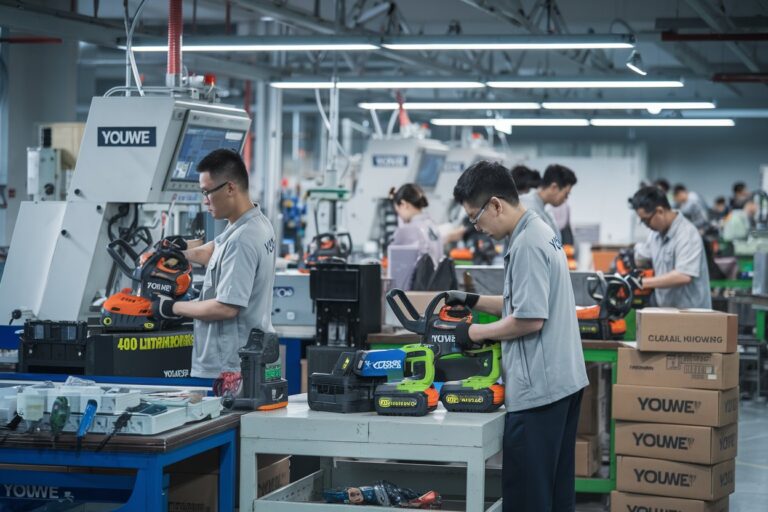
- Choose factories with in-house battery assembly and blade forging lines, rather than subcontractors.
✅ Example: YOUWE controls every step from brushless motor design to lithium pack testing, guaranteeing identical performance between samples and shipment.
⚙️ 2. Missing or Invalid CE/GS/EMC Certifications
Without valid CE or GS certification, European customs may reject shipments. Always verify certificates through official databases and demand valid test reports from your supplier.
Why It Happens
Some suppliers use expired or copied CE certificates, which can cause customs rejection or legal risks once the product enters the EU market.
Even genuine test reports sometimes fail to match the exact model you’re importing.
How to Avoid It
- Always verify certificates through the Notified Body database (search: “CE certificate check site + EU”).
- Request a complete EN/IEC test report (for example, IEC 62841-1).
- Add a clause in your purchase contract requiring valid and traceable certification.
🔍 Tip: YOUWE ensures all pruning tools are CE, GS, and EMC certified, covering every model variation, not just the main sample.
🚢 3. Shipping Delays and Poor Delivery Coordination
Late delivery is common when suppliers lack lithium battery export licenses or overpromise timelines. Choose DDP/CFR shipping and request DG documentation to avoid customs delays.
Why It Happens
During peak season (October–March), many factories overpromise lead times.
Worse, pruning tools with lithium batteries need DG (Dangerous Goods) documentation. Without it, the shipment can be stopped at customs for weeks.
How to Avoid It
- Confirm your supplier has a DG license for lithium battery export.
- Schedule production early — at least 45 days before shipping deadlines.
- Choose CFR or DDP shipping terms for predictable logistics.
- Ask for weekly production progress reports.
💡 Case Example: YOUWE cooperates with DFH Logistics, offering integrated door-to-door delivery across Europe — solving both documentation and timing issues.
💬 4. Communication Gaps and Misunderstood Specifications
Miscommunication on voltage, packaging, or color often causes costly rework. Keep detailed written specs, confirm updates in one thread, and demand packaging proof before shipment.
Why It Happens
Language differences, time zones, and scattered communication often lead to wrong color codes, missing accessories, or mismatched voltages (21V vs 24V).
Without proper documentation, even small miscommunication can lead to costly rework or returns.
How to Avoid It
- Provide a clear product spec sheet and confirm each point in writing.
- Use Notion, Google Sheets, or Excel for real-time product tracking.
- Always keep one version-controlled thread for artwork and specification updates.
- Ask your supplier to send photo proof of packaging before shipment.
📘 Pro Tip: YOUWE maintains bilingual product files and photo checklists for each order — minimizing the risk of misunderstanding across language barriers.
🧰 5. Weak After-Sales and Spare Part Support
Many suppliers ignore after-sales needs. Choose partners offering 12-month warranties, spare parts, and training resources to protect your brand reputation in Europe.
Why It Happens
Many suppliers treat an order as finished once goods are shipped.
However, in Europe, after-sales service defines your brand’s credibility.
Without spare blades, batteries, or chargers, importers are forced to handle warranty issues themselves — damaging both trust and profit.
How to Avoid It
- Ask for a 12-month warranty and confirm spare part supply.
- Keep a small local buffer stock for urgent replacement needs.
- Choose suppliers that offer technical manuals, videos, and spare part kits.
🔧 YOUWE Solution: Every YOUWE pruning tool comes with available spare packs (battery, charger, blade) to ensure consistent after-sales support across the EU.
🌿 Why Working with a Reliable OEM Partner Matters
Working with an OEM/ODM manufacturer ensures stable quality, faster logistics, and CE-certified compliance — key advantages for importers expanding in Europe’s professional tool market.
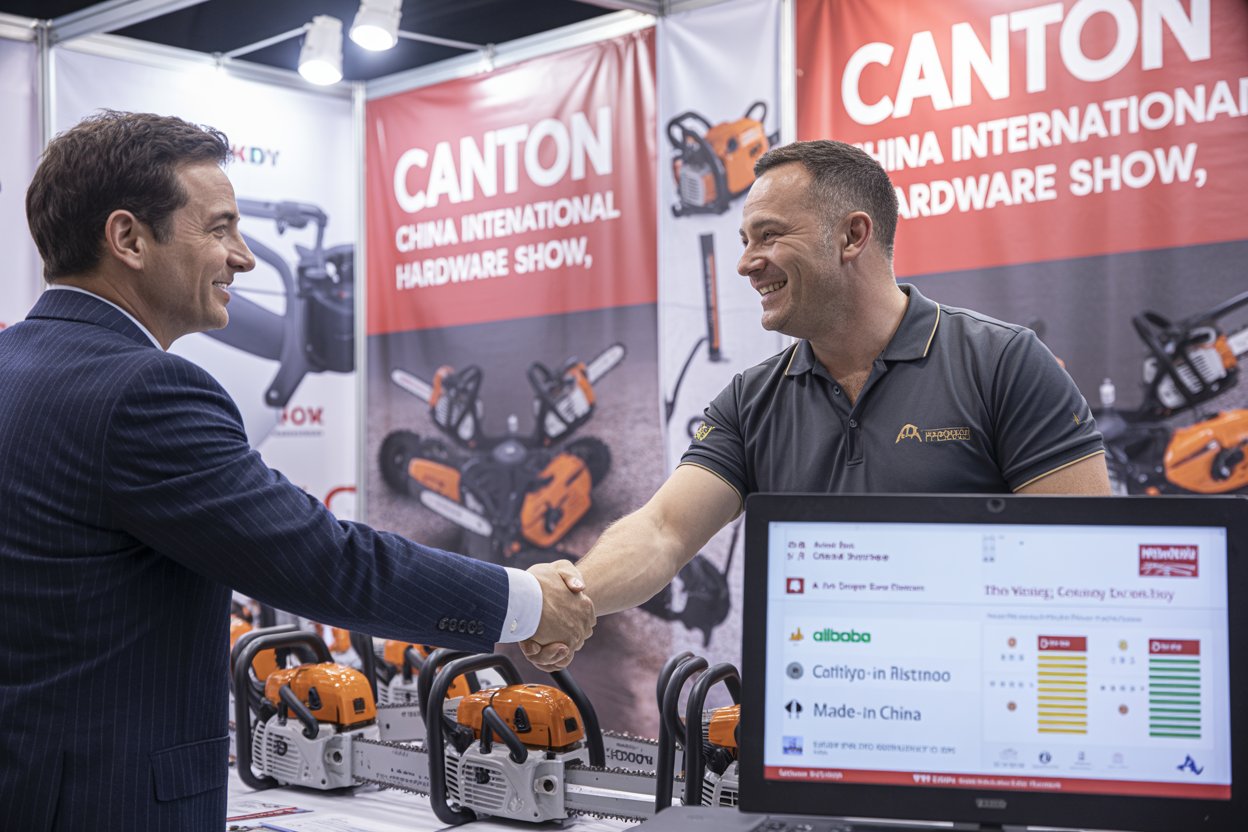
Sourcing success in Europe is not about finding the lowest price — it’s about finding a partner who guarantees quality, compliance, and delivery.
An OEM/ODM manufacturer like YOUWE Power Tools offers:
- Certified lithium pruning tools built under EU-compliant systems
- Full OEM customization (logo, color, packaging)
- Fast after-sales and logistics support through DFH Logistics
By partnering with YOUWE, importers eliminate risk and gain brand-building power — not just a supplier.
💡 Turn Common Importing Problems into Long-Term Advantage
By improving verification, communication, and supplier partnerships, importers can turn sourcing challenges into lasting advantages — building stronger brands and trusted supply chains.
Most sourcing problems aren’t inevitable — they’re preventable.
When importers take proactive steps to verify, communicate, and collaborate, they transform risk into opportunity.
With YOUWE as your OEM partner, you don’t just buy pruning tools —
you build a reliable supply chain, certified for Europe, tested for performance, and ready for growth.
🚀 Don’t let the same mistakes cost your next season.
Request your free sample consultation from YOUWE Garden Tools today —
and discover how to import CE-certified pruning tools with confidence, speed, and zero risk.
-
Strong after-sales support is essential for maintaining customer satisfaction and brand reputation in the competitive market. ↩
-
Exploring the advantages of OEM/ODM partnerships can help importers secure better quality and compliance in their products. ↩
-
Verifying CE certification is crucial for compliance and avoiding customs issues, ensuring your products meet EU standards. ↩