


When you rely on a cordless hedge trimmer1 for daily garden work or for your distribution business, performance and durability are everything.
Over the years at YOUWE Power Tools, I’ve seen how consistent maintenance can extend a tool’s life by two to three years and significantly reduce warranty claims.
Keeping your trimmer in top condition is not difficult. It just requires the right steps at the right time — from blade sharpening to battery care and proper storage.
To maintain your cordless hedge trimmer for long-term use, clean and lubricate the blades after every job, sharpen them regularly, care for the battery correctly, and store the tool in a dry and protected space. Regular maintenance ensures safety, efficiency, and long service life.
Let’s go through the exact steps that work best for both homeowners and professional importers.
How Do You Sharpen Hedge Trimmer Blades Correctly?
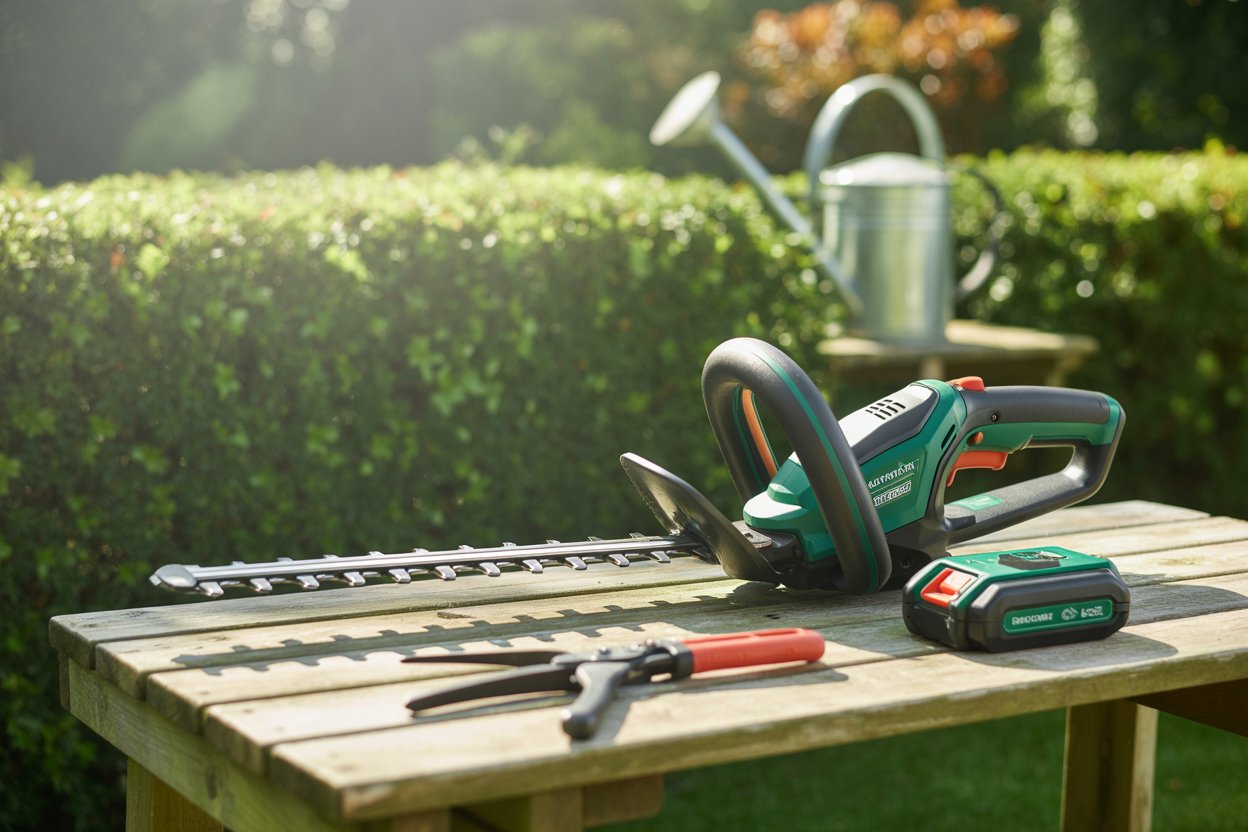
A sharp blade means clean cuts, less vibration, and lower battery consumption. Dull blades tear branches instead of slicing them, which also stresses the motor.
Sharpen hedge trimmer blades at a 30° angle using a flat file or grinder. Clean the blades first, file along the existing edge, remove burrs, and lubricate before use.
To do this properly:
- Disconnect the battery before you begin.
- Clean off resin and debris with a soft brush or mild detergent.
- Use a flat metal file or grinding stone at a consistent 30° angle.
- File each tooth evenly in the same direction.
- Wipe the blades and apply a thin coat of machine oil to prevent rust.
For frequent users, sharpening once every 20–25 working hours keeps performance stable. Uneven wear usually means it’s time to check blade alignment and lubrication.
How Should You Care for the Battery and Charger?
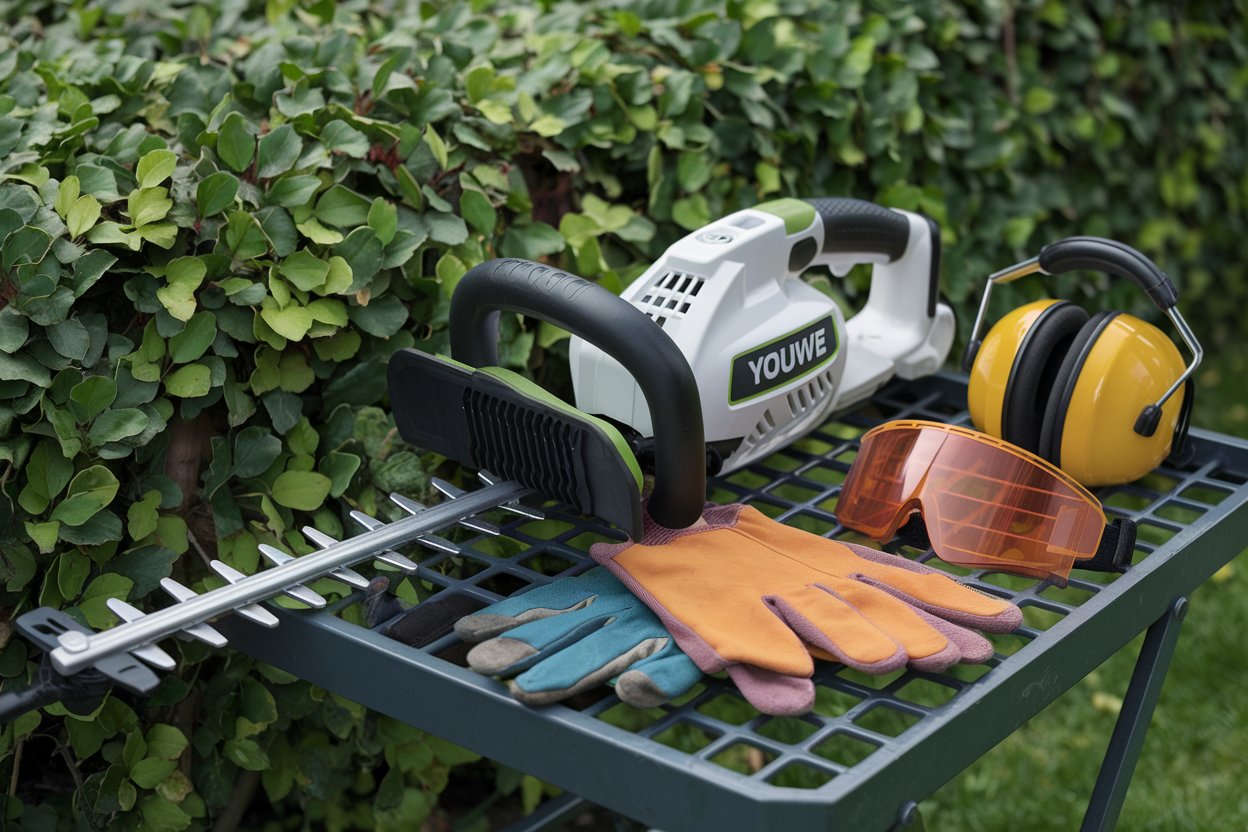
The battery is the most valuable and sensitive part of your cordless hedge trimmer. It’s also the one most often neglected. Over time, poor handling shortens its life, reduces capacity, and causes performance instability.
Keep your hedge trimmer battery between 40–60% charge when stored, avoid overcharging, and use only the original charger in a dry, cool area.
Here’s a detailed routine to maximize lifespan and safety:
1. Understand Your Battery Type
Most modern hedge trimmers use lithium-ion (Li-ion) batteries, which differ from older nickel-cadmium (Ni-Cd) types. Li-ion batteries perform best between 10°C and 30°C and degrade faster under extreme temperatures or deep discharges.
Avoid running the tool until the battery is completely empty. Instead, recharge when power drops to about 20–30%. Deep discharge shortens the battery’s cell life and can trigger internal voltage imbalance.
2. Correct Charging Practices
- Always allow the battery to cool for 15–20 minutes before charging after heavy use.
- Use only the original charger designed for your voltage platform (e.g., 21V, 24V, 36V).
- Plug the charger into a stable power source; voltage spikes can damage the circuit.
- When the LED indicator shows full charge, disconnect it — overcharging stresses the cells.
At YOUWE Power Tools, we design chargers with overvoltage and overcurrent protection, but proper user habits still make the biggest difference.
3. Ideal Storage Conditions
- Store batteries at 40–60% charge if unused for more than one month.
- Keep them in a dry, ventilated place, away from direct sunlight or heaters.
- Never store batteries inside vehicles or uninsulated sheds where temperatures can exceed 40°C.
- Periodically recharge every 2–3 months to maintain internal balance.
If you distribute cordless trimmers, include battery care instructions with every order — it helps reduce customer complaints and builds trust in your product quality.
4. Cleaning and Maintenance
- Wipe terminals with a dry microfiber cloth to ensure strong contact.
- Do not use solvents or alcohol near charging ports.
- Inspect the charger cable for damage or discoloration.
- Avoid coiling the charger tightly; this can break internal wires over time.
Following these steps, YOUWE has achieved a less than 0.3% battery failure rate across multiple OEM partnerships in Europe and South America. Good maintenance is part of product reliability.
How Should You Store a Hedge Trimmer in Winter or Rainy Seasons?
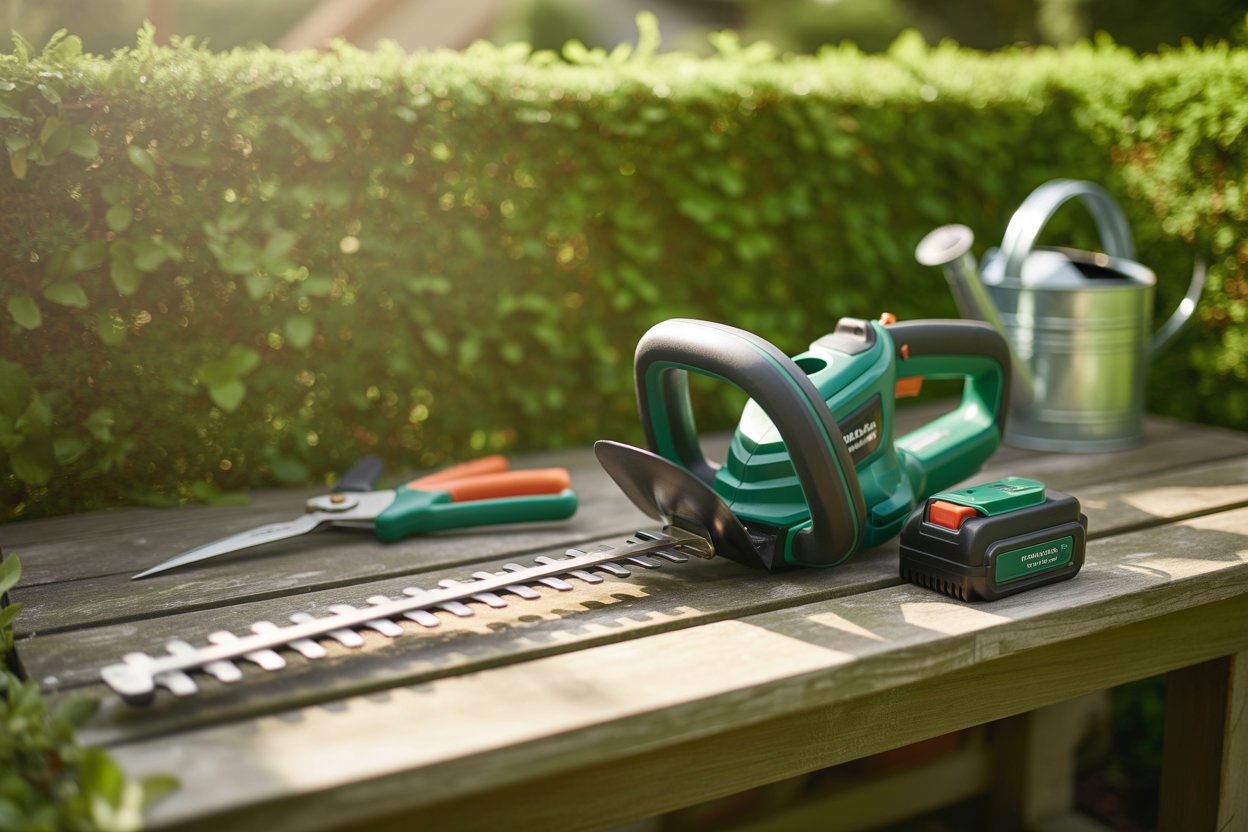
Storage is often underestimated, yet it directly affects both mechanical and electrical components. Whether you’re a home gardener or managing inventory for a dealership, proper storage ensures the tool stays ready for next season.
Before storage, clean and dry your hedge trimmer, apply blade oil, remove the battery, and store it in a dry area between 10°C–25°C.
Here’s a deeper look at how to protect your hedge trimmer during humid or cold conditions:
1. Pre-Storage Cleaning
After your final trimming session, remove plant sap and dirt using mild soap and a soft brush. Dry the blades completely before applying a thin layer of anti-rust oil. This prevents oxidation during long idle periods.
For professional users, using a silicone-based spray is more durable than basic oil and forms a water-resistant coating on exposed metal surfaces.
2. Battery Separation and Storage
Always remove the battery pack before putting the tool away. Store the battery in its original case or a separate dry compartment. Keeping it attached can lead to slow energy loss or unwanted current leakage.
For long-term storage (over 60 days), recharge the battery to 50% every two months to maintain balance. Never store it fully charged or fully discharged.
3. Ideal Environment
The best storage conditions2 are cool, low-humidity areas like utility rooms or tool cabinets. Avoid sealed plastic bags — trapped moisture can cause corrosion.
If your region experiences heavy rain or cold winters, place desiccant packs or moisture absorbers near the tool. For business warehouses, install a simple dehumidifier system to keep humidity below 60%.
4. Seasonal Re-Activation
Before using your trimmer after storage, do a quick inspection:
- Check all screws and blade alignment.
- Ensure the vents are dust-free.
- Charge the battery to full capacity.
- Test-run the motor for a few seconds before loading it.
These steps help avoid startup problems like motor resistance or voltage drop — common issues after long idle periods.
Proper storage not only preserves the trimmer’s lifespan but also protects your brand reputation as a supplier who delivers dependable products year-round.
What Common Problems Can Be Prevented with Regular Maintenance?
Routine maintenance prevents the most common hedge trimmer issues. Based on YOUWE’s after-sales data, over 70% of tool failures result from avoidable neglect.
Regular cleaning, sharpening, and lubrication can prevent overheating motors, stuck blades, short battery life, and noisy vibration.
Here’s what typically goes wrong and how to avoid it:
| Problem | Likely Cause | Preventive Action |
|---|---|---|
| Blades won’t move | Sap buildup or rust | Clean and oil blades after each job |
| Motor overheating | Blocked air vents | Remove dust regularly |
| Short runtime | Overcharged or damaged battery | Follow correct charging routine |
| Uneven cutting | Dull or misaligned blades | Sharpen and align monthly |
| Excessive vibration | Loose screws or imbalance | Tighten and inspect connections |
Consistent upkeep keeps your trimmer running smoothly, reduces motor strain, and minimizes downtime — especially valuable for professional users and distributors.
Who Are the Top Cordless Hedge Trimmer Suppliers in China?
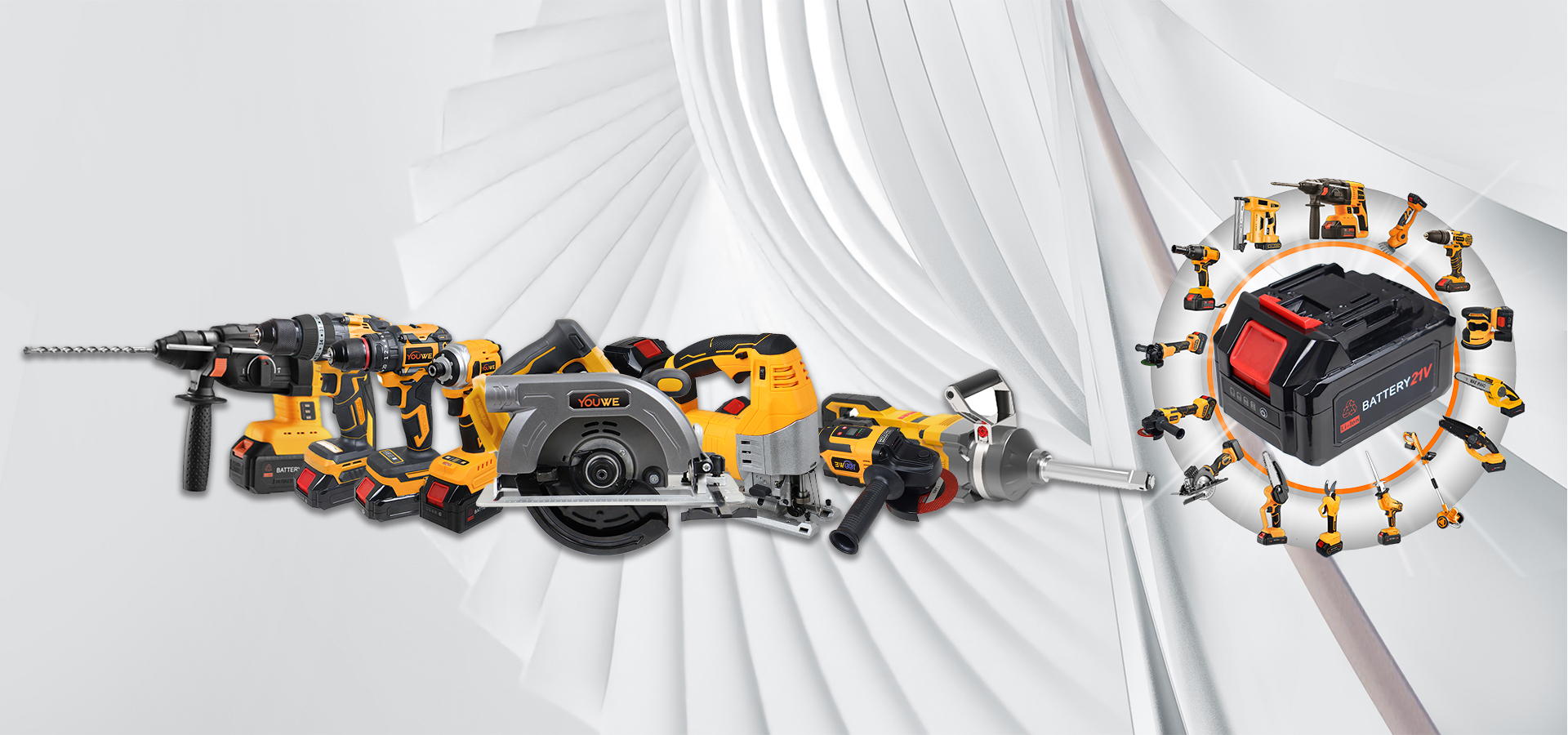
Choosing the right supplier is as important as maintaining the product itself. The best factories provide consistent quality, OEM flexibility3, and compliance with international standards.
The top cordless hedge trimmer suppliers in China combine OEM flexibility, CE/GS certifications, and strong export experience. YOUWE Power Tools ranks among the most reliable choices.
Here are ten trusted names in the Chinese market:
- YOUWE Power Tools – 15 years of lithium garden tool experience, OEM/ODM customization, CE/GS certified.
- Greenworks – Known for high-performance cordless garden tools.
- Dongcheng Power Tools – Broad product range and export coverage.
- HYCHIKA Tools – Affordable, beginner-friendly cordless tools.
- WORX (Positec Group) – Premium designs with advanced battery tech.
- TECCPO Tools – Compact cordless models, flexible customization.
- Vastar Tools – Focused on low-volume export clients.
- Jinhua Modern Tools – Reliable mid-range OEM producer.
- Zhejiang TACKLIFE Tools – Multi-platform battery solutions.
- Topshak OEM Factory – Entry-level cordless trimmers for online markets.
If you’re building your brand or expanding your product line, partnering with a stable manufacturer like YOUWE ensures both performance and reliability.
Conclusion
A cordless hedge trimmer1 can serve you for many seasons if treated right.
By keeping blades sharp, maintaining batteries carefully, and storing tools properly, you’ll enjoy consistent performance and fewer breakdowns.
At YOUWE Power Tools, we’ve seen that these small habits deliver long-term benefits — fewer returns, better customer satisfaction, and a stronger brand reputation.
Durability isn’t luck; it’s built through proper care.