
Many importers have faced the same frustrating problem — they place an order for cordless chainsaws1 from China, wait for weeks, and finally receive products that look perfect on the outside but fail in performance, certification, or packaging accuracy. Some shipments arrive late; others come with mismatched batteries or unstable motors. These small mistakes often turn into expensive losses once the goods reach Europe or the U.S. market.
After more than 15 years of working in power tool manufacturing2 and export, I’ve seen how preventable these issues really are. The difference between a smooth import experience and a costly one lies in the details you verify before confirming the order. In this article, I’ll walk you through the exact checks I recommend to every importer — practical steps that can protect your investment, your brand reputation, and your customer satisfaction.
Before ordering cordless chainsaws from China, importers should verify supplier reliability, certification compliance, battery quality, OEM capability, and quality control process. These checks protect your investment and ensure your products meet market standards.
Why Is It Important to Verify a Chinese Chainsaw Supplier?
Not every company you see online is a real manufacturer. Many are trading offices that resell products from different factories, which leads to unstable quality and inconsistent specifications.
Whenever I visit a new factory, I check three things first:
- Production capability — Do they have a real assembly line or only show warehouse photos?
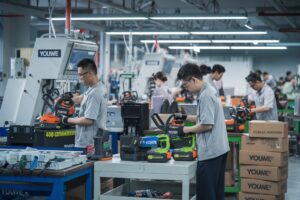
- R&D and testing equipment — Are there engineers working on prototypes and durability tests?
- Export experience — Can they provide shipment records, test reports, or reference buyers?
Ask for a factory license and check if their registered business scope includes “manufacturing of power tools.” This single step can eliminate 70% of unreliable sources.
If you’re unsure how to verify, read my related post: How to Identify Real OEM Manufacturers in China.
What Certifications Should Importers Require for Their Market?
Certification compliance is not optional—it’s what allows you to sell legally and safely.
For the European market, make sure your supplier provides:
- CE (basic product safety)
- EMC (electromagnetic compatibility)
- RoHS (environmental compliance)
- GS (voluntary quality certification, common in Germany)
For North America, focus on UL and FCC.
In addition, pay attention to the EU Battery Regulation (2023/1542), which controls how lithium batteries are labeled, recycled, and tracked.
At YOUWE, we design all battery packs to comply with this regulation. You can check more details in our article: EU Battery Regulation and Its Impact on Importers.
What Quality Control Steps Should a Reliable Supplier Offer?
A supplier without a structured quality control (QC) system is a risk to your brand.
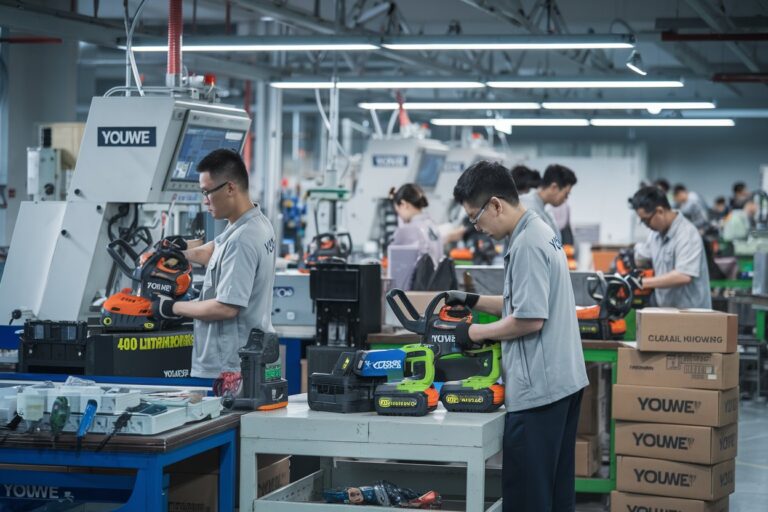
In our factory, every cordless chainsaw goes through a multi-step QC process:
- Incoming material inspection for motors, cells, and chargers
- Semi-finished assembly test to check motor torque and chain speed
- Final function and vibration test before packaging
Ask your supplier for QC photos or videos, and make sure they can provide a batch test report before shipment.
If you’d like to see what a full QC plan looks like, you can check our detailed guide: Cordless Chainsaw Quality Checklist.
How Do You Assess a Manufacturer’s OEM and ODM Capability?
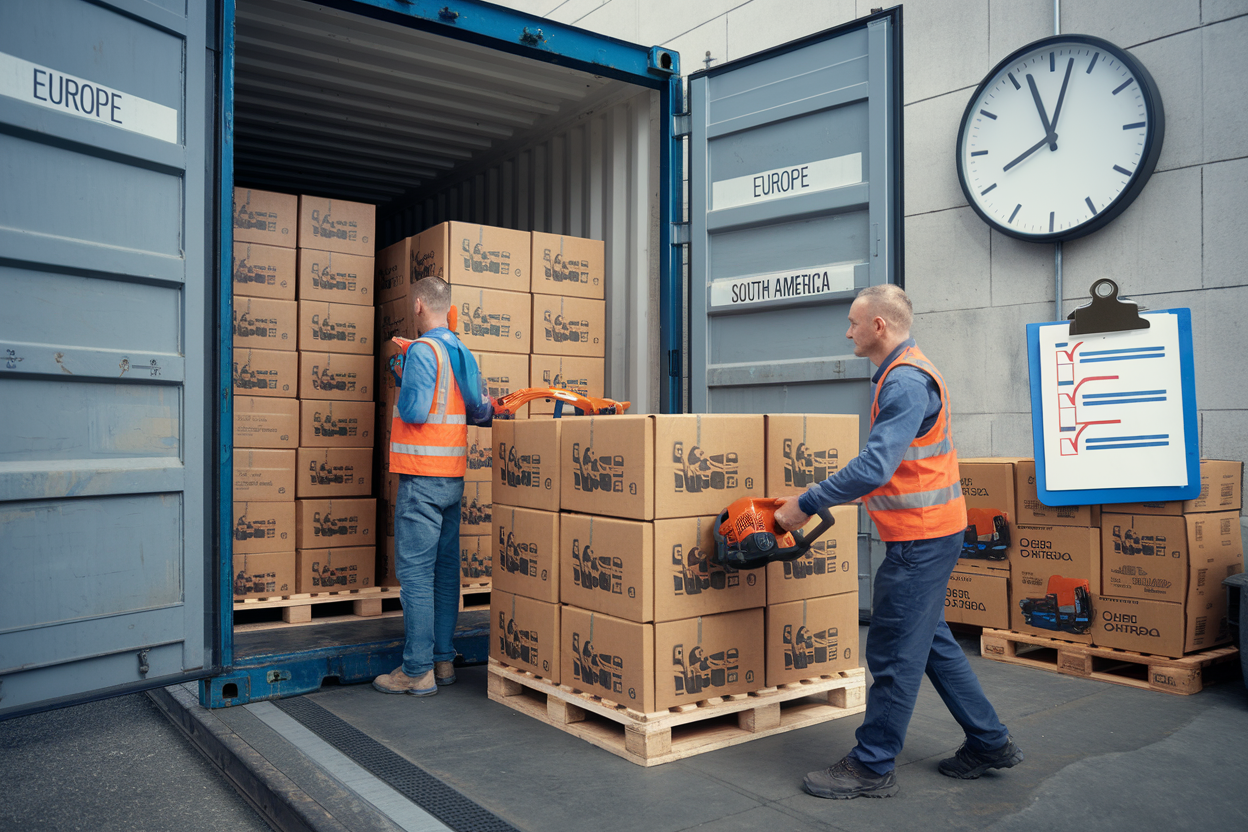
When you plan to build your own cordless chainsaw brand, customization flexibility isn’t just a plus — it’s what separates professional importers from short-term traders.
From my experience working with over 100 European and North American partners, a manufacturer’s OEM and ODM capability determines how fast you can build a brand that lasts.
The first step is to understand what kind of customization depth the supplier can handle.
If a factory only offers logo printing, that’s basic OEM. But if they can adjust structure design, motor configuration, or mold parameters — that’s ODM capability.
Here’s a practical checklist I recommend every importer follow before selecting a manufacturer:
- Design Capability — Ask if the supplier has an internal R&D department. A capable factory should show you CAD drawings, prototype samples, or exploded structure diagrams of previous models.
- Engineering Flexibility — Request modification options such as handle design, safety switch layout, or chain tension system. This shows whether the factory can adapt to your market preferences.
- Battery Platform Compatibility — Check if their cordless chainsaw can share batteries with other cordless tools like hedge trimmers or blowers. This makes your brand more scalable.
- Private Label Experience — Ask for examples of past OEM projects. At YOUWE, for instance, we’ve supported multiple EU brands to develop exclusive brushless 8-inch and 10-inch cordless chainsaws with CE, RoHS, and GS certifications.
- Mold Ownership — Clarify if the mold belongs to you or the factory. In ODM projects, we usually sign an agreement that protects our client’s design confidentiality.
If a supplier hesitates to provide sample drawings or past cases, that’s a signal they might only be a trading office.
In contrast, a reliable partner will guide you through the process — from prototype to final packaging design.
For a more detailed guide, you can read: How OEM/ODM Services Help Importers Build Their Brands.
Top 10 Power Tools Manufacturers in China for the EU Market
Here are the top-rated power tool manufacturers in China trusted by European importers in 2025, based on their product quality, OEM/ODM capability, and export reliability.
1. YOUWE
Founded in 2009 and headquartered in Jinhua, Zhejiang, YOUWE is a leading OEM/ODM manufacturer of cordless power tools with over 15 years of export experience. The company specializes in 21V and 40V lithium systems, producing drills, saws, wrenches, and other cordless tools. Known for in-house battery assembly, CE/GS/ROHS certification, and fast private-label service, YOUWE is a trusted choice for European brands seeking full customization and reliable delivery.
2. Jiangsu Dongcheng Power Tools Co., Ltd.
Established in 1995 in Qidong, Jiangsu Province, Dongcheng is one of China’s largest professional power tool manufacturers. The company employs over 5,000 workers and produces more than 300 models of tools, including grinders, drills, and saws. With strong R&D capacity, large-scale production, and global certification, Dongcheng serves as a benchmark for professional-grade manufacturing quality.
3. Positec Tool Corporation (WORX & Rockwell)
Founded in 1994 and based in Suzhou, Jiangsu, Positec is known globally as the company behind the WORX and Rockwell brands. It provides both branded and OEM cordless tools for international markets. With advanced product design, ergonomic engineering, and CE/EMC compliance, Positec has built strong partnerships with European distributors and major retail chains.
4. Suzhou Tolsen Tools Co., Ltd.
Founded in 2003 in Suzhou, Jiangsu, Tolsen Tools is a professional exporter of hand and power tools focused on cost efficiency and fast delivery. The company offers a wide product range for both DIY and professional users, providing strong after-sales support and extensive experience in OEM/ODM customization for European wholesalers and hardware retailers.
5. YOUWE TOOLS
Established in 2015 in Jinhua, Zhejiang, YOUWE TOOLS focuses on OEM cordless power tool solutions for global importers. Its product portfolio includes brushless drills, impact wrenches, circular saws, and screwdrivers, all designed with European standards of safety and ergonomics. The company provides flexible MOQ, mixed-container shipping, and rapid customization, making it a preferred partner for importers looking for efficient OEM support and steady supply capacity.
6. INGCO Tools Co., Ltd.
Founded in 2006 and located in Nanjing, Jiangsu, INGCO is a fast-growing power tool and hand tool brand known for its vivid yellow design and broad global distribution. It serves both DIY and semi-professional markets, offering competitive pricing, European-standard safety certifications, and consistent supply through a large export network covering over 150 countries.
7. Hangzhou GreatStar Industrial Co., Ltd.
Established in 1993 in Hangzhou, Zhejiang, GreatStar is one of China’s top industrial groups manufacturing power tools, hand tools, and measuring instruments. The company integrates R&D, production, and global distribution, supplying major brands and retail chains across Europe. It stands out for its scale, automation, and export management system.
8. Techtronic Industries (TTI) – China Operations
Founded in 1985, with major production bases in Dongguan and Suzhou, TTI is a global leader behind brands such as Milwaukee, AEG, and Ryobi. The company maintains world-class R&D and production standards, operating multiple facilities across China to serve both branded and OEM clients. Its focus on innovation, safety, and lithium technology positions it as a top-tier supplier for high-end markets.
9. KYNKO Power Tools Co., Ltd.
Founded in 1993 and located in Jinjiang, Fujian Province, KYNKO is a professional power tool manufacturer known for its durable performance and European certifications. The company’s key products include grinders, polishers, and rotary hammers. KYNKO’s ISO9001-certified factory ensures consistent production quality, and its exports cover over 60 countries including Germany, Spain, and Italy.
10. YOUWE Garden Tools
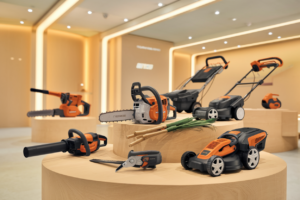
Founded in 2010 and based in Jinhua, Zhejiang, YOUWE Garden Tools specializes in cordless garden equipment such as chainsaws, hedge trimmers, blowers, and pruning shears. All tools use 21V and 40V shared battery systems, fully CE/GS certified. The company offers customized packaging, private branding, and flexible OEM cooperation, making it one of the most reliable suppliers for European importers expanding into cordless garden tools.
These ten manufacturers represent the strength and maturity of China’s power tools industry in 2025.
From full-scale factories like Dongcheng and GreatStar to specialized OEM experts like YOUWE, these companies combine production capability, certification compliance, and export professionalism — helping EU importers build powerful, trusted brands for the global market.
What Shipping and Lead-Time Details Should You Confirm?
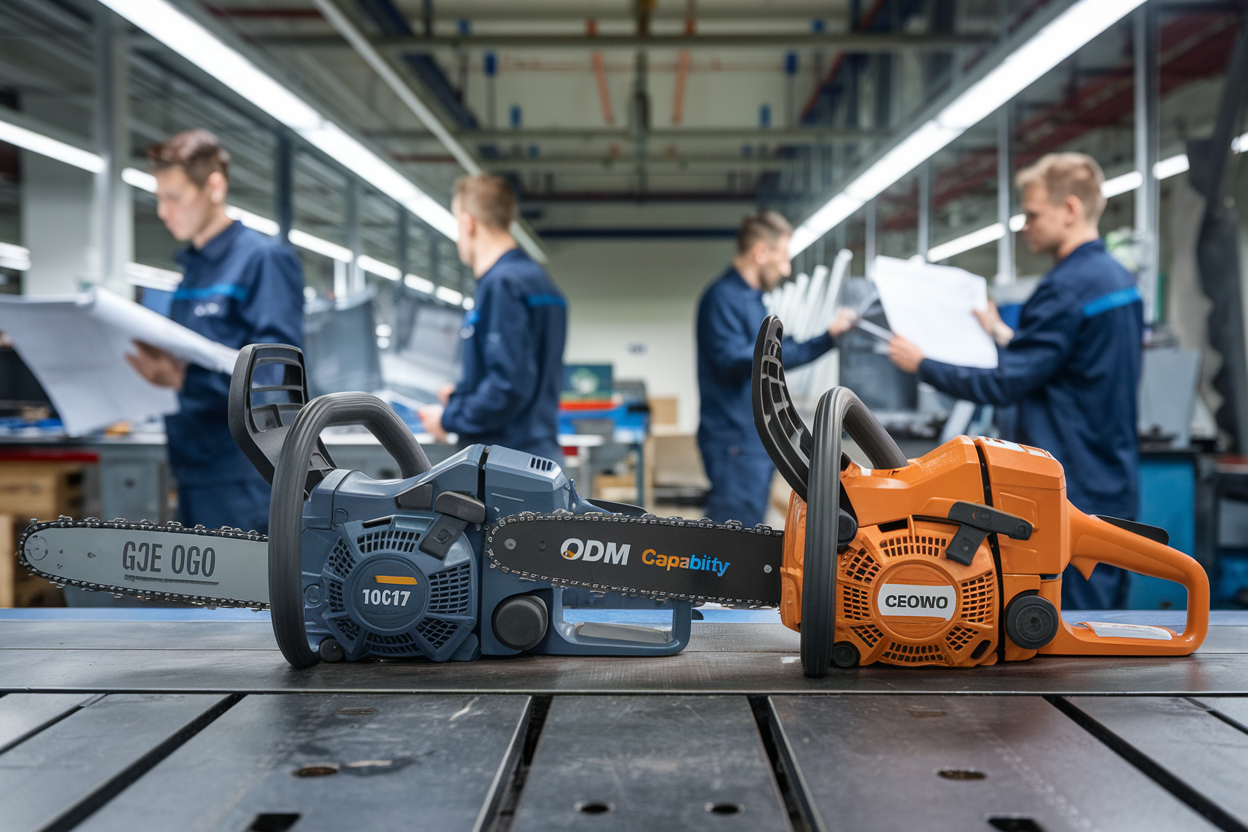
Even the best product loses its value if it misses the selling season. Many importers underestimate how logistics planning directly affects cost, delivery, and reputation.
In my work with European and South American buyers, I always encourage them to treat shipping and lead time as part of quality management, not as an afterthought.
Here’s how to manage it practically:
-
Confirm Production Lead Time — Always ask for a written production schedule, not just “around 30 days.”
- For regular orders (1×40HQ), 30–35 days is standard.
- For mixed models or OEM packaging, 40–45 days is more realistic.
- For repeat orders, suppliers with in-stock batteries can often shorten this to 25 days.
-
Align Incoterms with Your Logistics Plan — Decide whether to use FOB Ningbo, CIF Hamburg, or DDP Door Delivery.
- FOB gives you full control of freight.
- CIF is convenient if your forwarder handles customs.
- DDP is ideal for Amazon or e-commerce buyers who prefer delivered pricing.
-
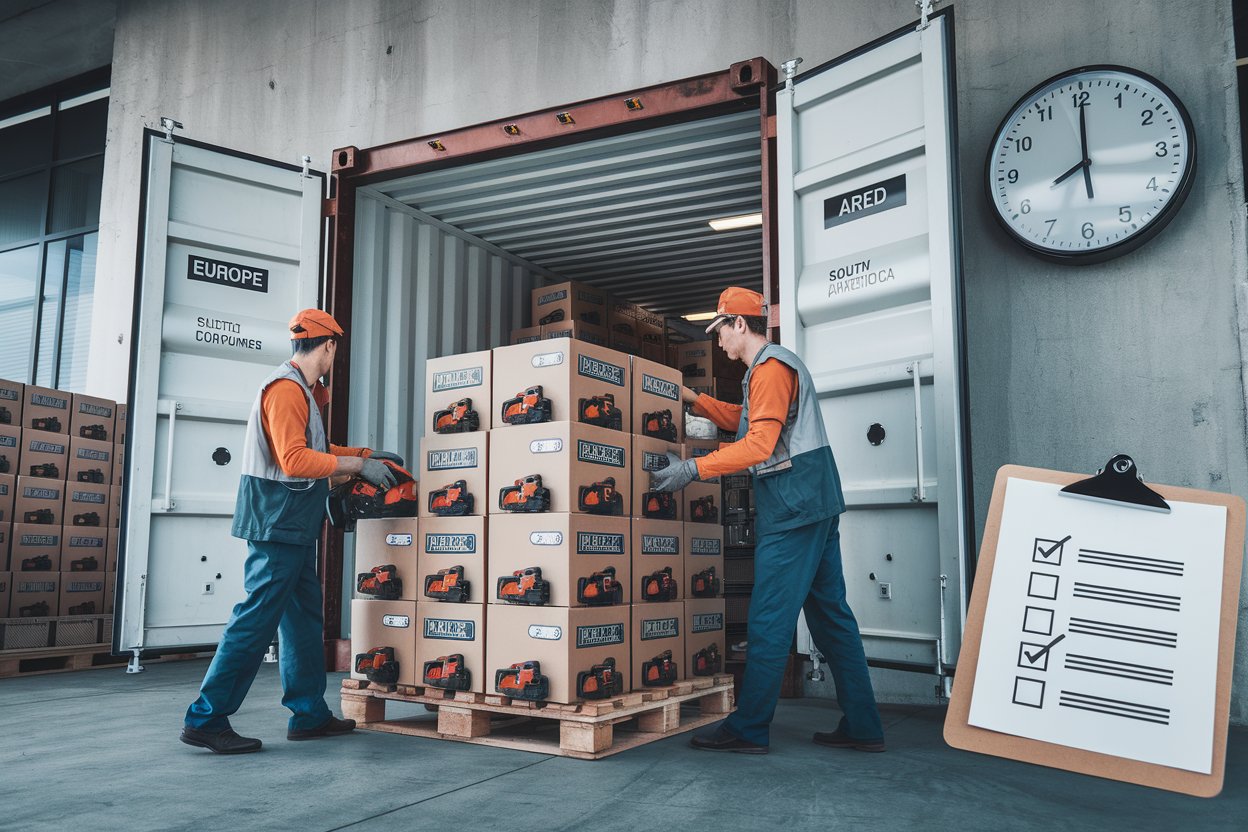
Packaging and Loading Plan — Ask for carton dimensions and pallet layouts early. This helps your freight forwarder optimize container space and cost.
We often share our Packaging and Loading Optimization Guide with new clients to help them plan shipments more efficiently. -
Seasonal Production Strategy — Plan ahead for the European gardening season (February–August). If you confirm orders before Chinese New Year, you avoid congestion and ensure your chainsaws arrive before retail demand peaks.
-
Communication Routine — Set a weekly production update. In our system, we send photo reports at three milestones: raw material ready, assembly start, and final inspection. This transparency keeps buyers in full control even from abroad.
For more insights, you can read: How to Plan Your Cordless Tool Orders for Peak Season. It’s a complete guide I wrote for importers who want to keep supply chains smooth year-round.
Why Should You Test Samples Before Mass Production?
Testing samples isn’t a formality — it’s the foundation of your product quality.
Every professional importer I know relies on a structured sample evaluation before giving the green light for mass production. From my experience, a $200 sample test can save you from a $20,000 shipment problem.
Here’s how I recommend you test your cordless chainsaw samples step-by-step:
-
Performance Testing
- Measure runtime under continuous cutting using the same wood type.
- Record chain speed, torque, and battery consumption curve.
- Compare it with your existing market model or competitor’s product.
-
Functional Testing
- Check chain lubrication — automatic oiling should be consistent during cutting.
- Test the chain tension system; it should allow tool-free adjustment.
- Evaluate the ergonomic feel — vibration, weight balance, and handle comfort matter to users.
-
Battery Compatibility
- Ensure batteries are interchangeable with other tools in your lineup (pruning shears, hedge trimmers, blowers).
- Inspect the charging indicator and over-discharge protection features.
-
Safety and Durability
- Run multiple charge-discharge cycles to confirm stability.
- Check protection guards, switches, and anti-kickback design compliance.
-
Golden Sample Documentation
Once you’re satisfied, ask the supplier to label this as your golden sample.
This reference should include clear specifications, photos, and testing data.
At YOUWE, we store each golden sample physically and digitally for every client, ensuring every future batch matches the approved version.
For reference, you can follow our Cordless Chainsaw Quality Checklist to build your own structured inspection sheet.
Sample testing doesn’t just prevent quality issues — it builds trust.
Buyers who test smartly always end up with consistent quality, stronger brands, and fewer after-sale claims.
Conclusion
Importing cordless chainsaws from China can be both profitable and reliable if you follow the right process.
Start by verifying the manufacturer, reviewing certifications, and testing battery and sample performance before mass production.
With over 15 years of production and export experience, our team at YOUWE Power Tools supports importers with CE-certified cordless tools, flexible OEM customization, and strict quality control.
If you’re planning to expand your product line or compare samples, feel free to connect with me directly — I’ll gladly share more practical sourcing tips3 tailored to your market.